How do I set up Order Statuses?
This article is a step-by-step guide to help Administrators configure and customize Order Statuses.

Written by Annukka Matilainen
Updated at October 21st, 2026
Table of Contents
Overview
Every order status you create in Fixably has a type. The type is more than a label. It tells Fixably how that status connects to the rest of the system, including whether it gets set automatically and whether it sets off other actions, like sending an email to a customer.
This article walks through the status form, including the Display order field that controls where a status appears in status pickers and the Yellow and Red limits, which are entered in hours. It then lists every status type, what it means, and what it triggers automatically, including which types are tied to a specific integration (such as GSX, GSPN, or DST).
Setting up Statuses
- Using an Administrator account, from the Fixably Home Screen, select your User Name menu and then click System Settings.
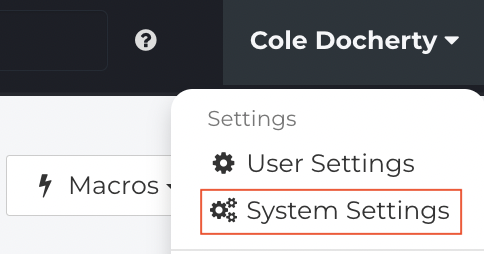
- From the Settings Menu, click Order Statuses.

- Pick the Queue you want to work on at the top of the page, then click New Status.
- Enter the Name for your Order Status. The optional Public Name is what customers see in the portal when it is set. Add a short Description so your team knows what the status is for.

- Assign the new Order Status to a Queue.

- Set the Display order (ordinal). This number decides where the status appears in the status pickers in Fixably, such as the status dropdown on the order view and the Order Statuses list in System Settings (the status filter in Order Lists stays alphabetical). Lower numbers come first. Statuses are sorted within their type group, so a status with display order 10 of type Waiting for parts is listed first among the Waiting for parts statuses, not first overall. Leave the field empty to keep the current behaviour: statuses without a display order are listed after the numbered ones, in the order they were created, with the default status of each type leading its group. Use steps of 10 (10, 20, 30…) so you can slot a new status in later without renumbering.

- Select the Type of Order Status. The list is grouped into General types, types that belong to integrations and features on your account, and types for integrations your account does not have. The last group stays selectable, but is marked, and Fixably will not set those statuses automatically. As soon as you pick a type, a short description under the field tells you what the type means and when Fixably sets it on its own. The full list is in Status types and what they trigger below.

- Select the Time Type. This field indicates where the following expected action will come from when an Order enters this status.

- Service Provider > someone from your business needs to act next
- Customer > waiting for the customer to act next
- Third Party > waiting for a third-party (like a Vendor or Manufacturer) to act next
- Not applicable > no one is expected to act next (like when something has been picked up already)
- The Yellow Limit highlights the order yellow in Order Lists once it has sat in this status for the number of hours you enter. Decimals are fine: 1.5 means 90 minutes, 72 means three days. Leave the field empty for no limit. The line under the field reads the limit back in plain language and tells you whether an email will go out. Add one or more addresses to Yellow limit email notification if you want an email when the limit is reached; the email goes out at the daily Email time further down the form.

- The Red Limit works the same way and highlights the order red. It is usually set higher than the yellow limit, for example yellow at 24 hours and red at 72 hours.

- When complete, click Save.

Back in the Order Statuses list, statuses appear in display order and the limit columns show the hours you entered, with the same value in days or minutes beside them. A dash means no limit is set.

Putting statuses in workflow order
The display order is most useful when a queue has several statuses of the same type. Say your Austin store's iPhone queue has three Waiting for customer statuses: Waiting for customer approval, Waiting for customer to drop off, and Waiting for customer callback. Give them display orders 10, 20 and 30 and they will appear in that order in the status dropdown on every iPhone order, instead of in the order they happened to be created. The display order does not change what the status does, only where it is listed. Statuses inherited from a parent queue follow the same rule, with the queue's own statuses listed before the parent's inside each type group.
Status types and what they trigger
The same descriptions appear under the Type field in the status form, so you can check a type while you are setting up the status. Statuses marked as tied to an integration only behave this way if your shop has that integration enabled. If the integration isn't connected, that automation simply won't happen, and you can still set the status by hand.
| Status type | What it means | What triggers automatically | Tied to an integration? |
|---|---|---|---|
| Custom | No special system behaviour. Use this for a status your shop defines for its own purposes. Fixably never moves an order into it automatically. | None | No |
| In queue | The device has been checked in and is waiting for a technician. | Set automatically when a queue is assigned to a new order, when an order is checked in without a technician, and whenever an order loses its technician. | No |
| Processing | A technician is actively working on the device. | Set automatically when a technician is assigned to the order. | No |
| Waiting for parts | The repair is blocked because a part is needed. | Set automatically when a purchase order is created for the order, or when a GSX or GSPN repair needs parts. | No |
| Parts arrived | The part has come in, and repair can resume. | Set automatically once every part for the order has been received or collected. | No |
| Waiting for parts from stock | The part is available in your own stock, but hasn't been collected yet. | Set automatically after a part is confirmed available from stock. | Yes, GSPN |
| Waiting for parts order | The part isn't in stock and had to be ordered. | Set automatically after a part is confirmed unavailable and must be ordered. | Yes, GSPN |
| Ready for pickup | The repair is complete, and the device is ready for the customer to collect in person. | Set automatically when a User clicks the “Close” button in an Order when the Delivery method is type = Pickup or Drop Off, or when an internal transit shipment arrives at the store. | No |
| Picked up | The customer has collected the device. | Set automatically when the “Order Ready” button is used and the Delivery method is type = Pickup or Drop Off. | No |
| Ready to be shipped | The repair is complete, and the device is being prepared to ship back to the customer. | Set automatically when a User clicks the “Close” button in an Order when the Delivery method is type = Shipping. | No |
| Shipped | The device has been shipped back to the customer. | Set automatically when the “Order Ready” button is used and the Delivery method is type = Shipping. Also set automatically when an Outbound shipment is created for an Order. | No |
| Waiting for processing | The order needs its technician again before work resumes. | Set automatically when a handler notification is created (for example a new note) while the Order Status time type = Customer. | No |
| Waiting for customer | The order is blocked pending a response or action from the customer. | No automation in Fixably's core system. Only set automatically when using Cello. | Yes, Cello |
| Waiting for manufacturer | The order is blocked pending a decision from the manufacturer or another third party, such as Apple. | Set automatically when a repair is created with manufacturer review requested. | Yes, GSX |
| Waiting return from apple | The device has been sent to Apple and Fixably is waiting for it to come back. | Set automatically when GSX releases a mail-in repair that returns to your service location. | Yes, GSX |
| Pending cost estimate acceptance | A cost estimate has been sent to the customer and Fixably is waiting on their decision. | Set automatically when a cost estimate is created and sent. | No |
| Cost estimate accepted | The customer approved the estimate. | Set automatically when the customer selects "approve" on the estimate. The customer gets a confirmation email. | No |
| Cost estimate rejected | The customer declined the estimate. | Set automatically when the customer selects "decline" on the estimate. An estimate that runs out without an answer uses Cost estimate expired instead. | No |
| Cost estimate expired | The cost estimate ran out before the customer answered. | Set automatically by the hourly check. Fixably emails the customer and removes the estimate from the order. | No |
| Cost pending customer | A cost or payment decision is still outstanding from the customer. Estimate reminder emails are only sent while the order is in this status. | No automation in Fixably's core system. Only set automatically when using Caperio. | Yes, Caperio |
| Waiting for insurance company answer | The order is blocked pending a decision from the customer's insurer. | No automation in Fixably's core system. Only set automatically when using Caperio. | Yes, Caperio |
| Cost estimate selected | The customer chose a response option other than approve or decline. | Set automatically when the customer picks that option. | No |
| Waiting for payment | Fixably is waiting on payment from the customer. | Set automatically when an accepted cost estimate takes payment, or when an invoice is created for a cost estimate. | No |
| Waiting for fmi deactivation | Fixably is waiting for Find My iPhone or activation lock to be turned off. | None | No |
| Waiting for delivery | Fixably is waiting for the device to arrive from the customer. | None. While an order is in this status the customer can still cancel a mail-in booking. | No |
| Sent to shop | The device has been sent to a retail location. | No automation in Fixably's core system. On a DST order, setting it tells DST the device was sent to the shop. | Yes, DST |
| Received in shop | The device has been received at a retail location. | No automation in Fixably's core system. On a DST order, setting it tells DST the shop has the device. | Yes, DST |
| In internal transit | The device is moving between your shop's own locations. | Set automatically when an internal transit shipment is sent, and again when it arrives. Also locks the order from further edits while in transit. | No |
| Cancelled | The order has been cancelled. | Set automatically (and the order closed) when a user cancels the order, when its appointment is cancelled, or by the daily cleanup job if your shop has enabled automatic cancellation for stale orders. | No |
| Appointment set | An appointment has been scheduled. | None. Booking an appointment in Fixably does not set it. | No |
| Waiting for local approval | Fixably is waiting on a manager's local sign-off before the repair can continue. | Set automatically when a repair enters the "pending local authorization" status in GSX. | Yes, GSX |
| Manufacturer requested more info | The manufacturer declined the repair, or needs more information before proceeding. | Set automatically when GSX reports the repair as declined while the order waits on the manufacturer or parts. | Yes, GSX |
| Parts backordered | Apple has confirmed a part is on backorder. | Set automatically once GSX sends a recovery date for a part, when "Import Apple repair notes to order" is on in the GSX settings. | Yes, GSX |
| Invoiced | The order has been invoiced. | No automation in Fixably's core system. Set automatically when a related GSPN reimbursement claim is marked processed. Creating an invoice does not set it. | Yes, Samsung reimbursements, synced through IGSPN |
| Waiting for pop approval | A manager has to review the proof of purchase before the repair continues. | Set automatically when a proof of purchase looks like a duplicate or matches an open order, if proof-of-purchase approval is enabled. | Yes, Proof of purchase |
| Pop rejected | A manager rejected the order's proof of purchase. | Set automatically when the proof is rejected in Fixably. | Yes, Proof of purchase |